


 Verified Purchase


Sleep Better Podcast · Sleep Soundscape · 30 min
The Storm Across the Wheat
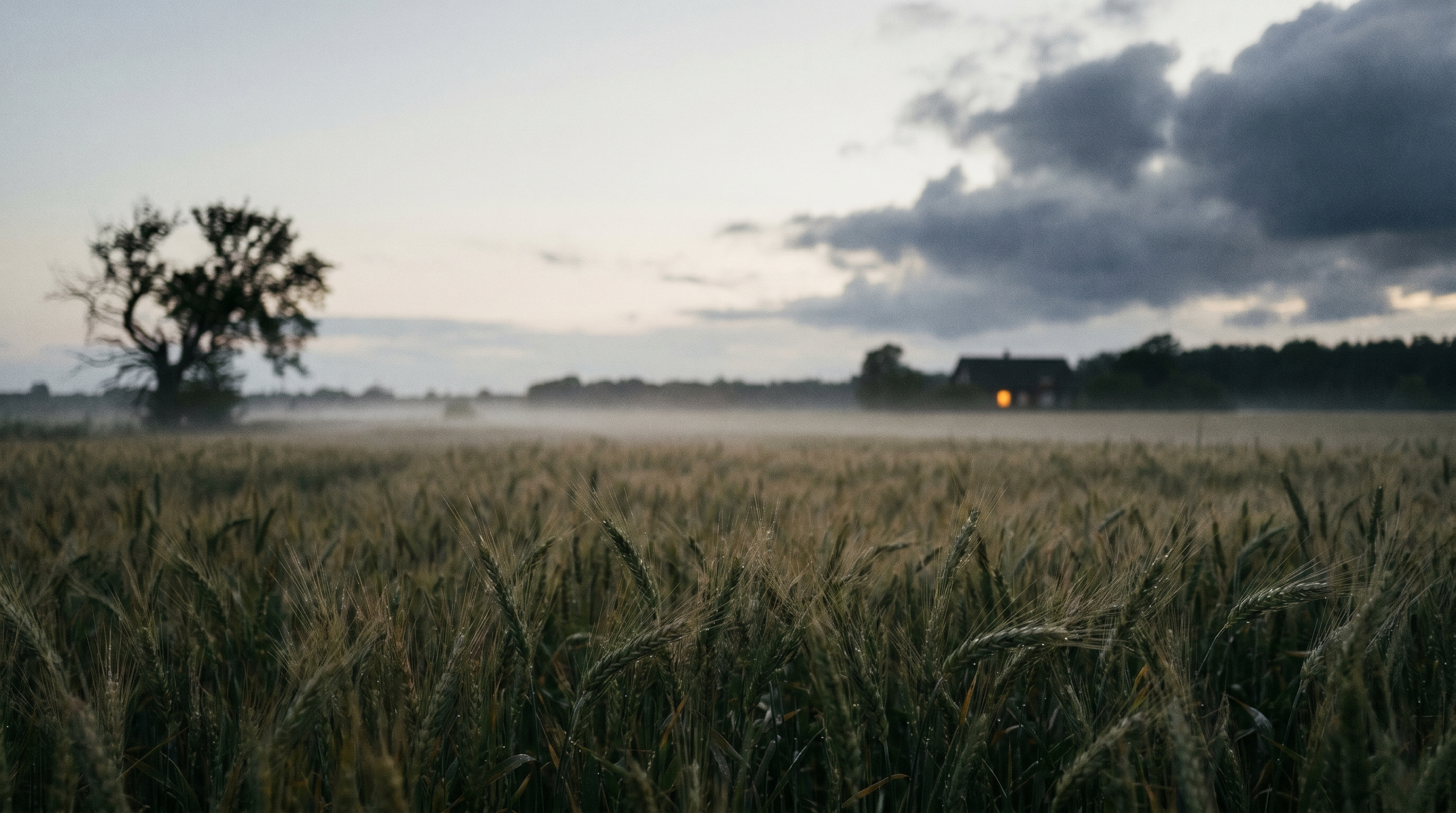
A summer thunderstorm moves slowly across a wheat field at dusk — from the breathless stillness before the first drop to the cricket-filled quiet that follows — carrying you gently into deep rest.
Listen
Player not loading? Listen on Buzzsprout, Apple Podcasts, or Spotify.
About this soundscape
There is a particular kind of peace that only arrives after something has passed through. This episode takes you to the edge of a wheat field at the turning of a summer afternoon, where the air is thick and waiting and the light has gone to copper — and then lets a slow, generous thunderstorm roll through from beginning to end, until what is left is mist and crickets and a dark blue evening that asks nothing of you at all.
The storm here is not dramatic. It does not alarm. It arrives the way a trusted thing arrives — gradually, with full intention, moving through at its own pace and leaving the landscape cleaner and quieter than it found it. The sounds layer and deepen as the episode unfolds: the first solitary raindrop on a broad leaf, the steady percussion of rain on wheat, the low sustained rolls of thunder moving east, and finally the long, unhurried settling of a field returning to stillness. Margaret guides you through each stage with the patience of someone who has stood at the edge of many fields and knows that the best thing you can do in a storm is simply let it pass.
Listeners who find themselves awake in the middle of the night — thoughts circling, the body tense — often find that the particular quality of rain on a wheat field dissolves what silence alone cannot. There is something in the layered, continuous nature of this soundscape that gives the nervous system permission to stop attending and simply float. By the time the crickets begin their slow, faithful chorus and the mist settles over the dark field, there is very little left between you and sleep.
Transcript
There is a particular kind of stillness that arrives before a summer storm.
Not an empty stillness. A full one.
The wheat field knows it first. The stalks — millions of them, standing shoulder to shoulder in long, drowsy rows — seem to pause. They have been swaying all afternoon, lazily, the way things move when there is nowhere to be. But now they are still. Listening.
The air has thickened. It holds itself differently, the way water holds just before it spills over the rim of a glass. Heavy with what is coming. Warm and close and waiting.
The light has changed too. What was gold an hour ago has gone to copper, and now to something harder to name — a greenish silver at the horizon where the sky has begun its work. The sun is still somewhere above, but softened, diffused, pressed behind the first layer of cloud that has been building all afternoon like a slow and patient thought.
A single crow lands at the edge of the field and then thinks better of it. Lifts away without a sound.
The wheat waits.
You are standing at the edge of it all — at the edge of a long gravel lane that runs alongside the field, watching from the shelter of an old elm tree whose bark is rough and cool against your palm. The leaves above you have gone quiet. The birds have gone quiet. Everything is holding its breath in the most comfortable way, the way you hold your breath not from fear, but from wonder.
Then — there.
Far away. So far away it is less a sound than a feeling. A low, slow rumble that begins somewhere in the chest and doesn’t so much end as dissolve. The first thunder. Still miles off, still polite, still introducing itself from the other side of the county.
The wheat hears it.
The stalks shiver — a single, gentle ripple that moves through the field from west to east like a thought crossing a sleeping mind. One wave of motion, then stillness again. Then another, slightly stronger. The field is waking up in the softest way.
The first drop of rain, when it comes, lands on a broad leaf somewhere near your feet. You hear it before you feel it — a single tap, precise and clear, like a finger on a drumhead. Then a second drop. Then a pause long enough that you wonder if that was all. Then three more, scattered, random, the storm still deciding.
The smell arrives now.
Petrichor — that ancient word for that ancient smell. Rain meeting dry earth. Dust and stone and root meeting water after a long afternoon of sun. It rises from the ground around you like something being remembered. Like something the field has been waiting to say all summer.
You breathe it in.
The drops come more steadily now. Not fast — not yet — but with growing conviction. You can hear them on the elm leaves above you, a soft percussion, irregular and unhurried. Each drop lands and the leaf bobs once and sends a small shiver down its stem. The sound builds slowly, the way a fire builds when someone patient tends it — a small crackle here, a small crackle there, and then suddenly the room is warm.
Another roll of thunder. Closer this time. Still low and slow, still moving through the air the way honey moves through water — thickening as it goes, spreading, filling all the available space. You feel it in your sternum. A low hum that the body recognizes before the mind can name it.
The wheat field answers.
This time the ripple is longer, fuller. The stalks bend together in one direction and then the other, a slow and enormous breathing. The green-gold of the wheat has gone darker in the changed light, almost olive, almost grey at the tips, and the heads of grain nod and dip and nod. The whole field is in motion now, a slow, rolling conversation with the wind that has finally begun to move.
The wind is gentle still. Cool. After the heavy warmth of the afternoon, it arrives like a kindness.
You turn your face into it.
The rain is real now. Not heavy — but committed. A steady, soft rain, the kind that soaks in slowly rather than running off, the kind the earth drinks rather than sheds. It moves across the field in visible curtains, a grey softening that sweeps from west to east, and where it passes, the wheat bows its head.
You can hear it clearly now — the rain on the field is its own particular music. Different from rain on pavement, different from rain on a rooftop. Rain on wheat makes a hushed, continuous sound, like breath, like applause from a very long way off, like ten thousand tiny conversations happening all at once at a frequency just below understanding.
The elm shelters you, mostly. A drop finds its way through the leaves and lands on your shoulder, cool and certain. Another on your wrist. You are not quite dry but you are not quite wet, and this in-between is its own kind of comfort.
The thunder comes again. And now it is different.
Now it arrives not as a distant suggestion but as a presence. A deep, sustained rolling that begins far to your left, moves overhead, and continues far to your right before finally releasing itself into the air. It takes a long time. It takes a long, slow, satisfying time, and underneath it the rain keeps its own steady rhythm — not interrupted by the thunder but accompanied by it. The two sounds have nothing to prove to each other. They simply exist together.
Lightning, somewhere in the cloud. Not a strike — just a slow bloom of white light that illuminates the underbelly of the sky from within, lighting the grey and purple mass of cloud the way a lamp lights a shade. The wheat field flashes pale gold for one breath, then returns to its darker self.
The rain intensifies. Only slightly — a thickening, a leaning-in. The sound of it on the elm leaves above you becomes a continuous murmur, each individual drop now indistinguishable from the rest, folded into a single soft voice. The smell of wet earth has deepened. Underneath it now you can smell the wheat itself — warm and vegetable and sweet, a smell like bread that has not yet been baked, like something still becoming what it will eventually be.
You lean against the elm.
The bark is rough at your back and the ground is slightly soft beneath your feet and the air is cool on your face and the rain is a sound that asks nothing of you. It has been raining since long before you arrived here and it will rain long after you have gone, and this is not a lonely thought. This is a settling thought. A thought that puts you gently in your proper size.
Another bloom of light in the clouds. And then the thunder — slower this time between flash and sound, three, four, five seconds — and this means the storm is not quite overhead. The storm is rolling across the field to the north of you, moving the way all summer storms move eventually: onward, purposeful, indifferent, beautiful.
The wheat field is fully alive now. Every stalk bent and nodding, the grain heads dark with water, the whole landscape moving in one long, slow exhalation. The sound of it — rain and wind and wheat and thunder — is layered and full and strangely quiet at its center. There is a stillness at the heart of all this motion. A hush inside the sound, the way there is silence at the center of a spinning thing.
You find it.
You let it hold you.
The rain slows slightly. The wind gentles. The thunder moves further east now, and when it comes it is softer at the edges, the way the voice of someone leaving a room becomes softer as the door closes. Still audible. Still there. But traveling away.
The smell of the field rises more strongly in the aftermath. Wet soil and bruised grass and something green and alive and completely untroubled. The elm drips steadily — a separate rhythm from the rain itself, drops that have gathered in the leaves now falling in their own time, their own intervals, slower and more deliberate than the rain, as if the tree is telling the story of the storm in its own unhurried way.
The sky is beginning to differentiate. Where it was a uniform grey, you can see now the places where the cloud is thinning, pulling apart at the western edge where the storm came from, letting through a quality of light that is silver and soft and low. Not sunset yet. But the long, washed light of an evening that has been cleaned by rain.
The wheat field has settled.
Still damp, still trembling slightly in the last of the wind, but the great heaving motion is over. The stalks have straightened as much as they will tonight. The grain heads hang a little lower than before, weighted with water, but this is not an unhappy weight. This is the weight of having been washed, of having stood through something and come out clean on the other side.
A small bird — you cannot see it in the thickening dusk, but you can hear it — tests a single note from somewhere deep in the wheat. One note. A pause. One note again. As if checking whether the sky has finished what it came to do.
The sky has nearly finished.
The rain has become a mist now. Still falling, technically, but so fine it is almost indistinguishable from the general dampness of the air. It catches the last silver light and hangs there, suspended between cloud and field, soft as breathing.
The elm drips.
The wheat rests.
The thunder, far away now, murmurs once more — a sound so low and so distant it might be the earth itself, settling. Moving one slow shoulder. Finding a more comfortable position after the long afternoon.
The light continues its descent. The silver deepens toward a blue that is neither quite day nor quite night but something held between — the particular blue of a summer evening after rain, a color that belongs only to itself and to this moment. The wheat field holds this color. It takes it in and gives it back softened, transformed.
You are still and the field is still and the air is cool and clean and the last of the rain falls so quietly now it is nearly silence.
Nearly.
But not quite.
Because silence would be too much, too soon. The rain knows this. It keeps its voice low and steady, a murmur now, a lullaby, a sound that is so continuous it becomes a texture more than a sound. Something you don’t so much hear as rest inside of.
The bird in the wheat calls once more. Two notes this time. A small declaration.
Something moves at the far end of the field — a fox, perhaps, stepping carefully from the tree line, nose lifted to the wet air, testing what the storm has left behind. It pauses. Decides. Moves on into the dusk.
The elm drips.
The mist settles lower over the field. Where the wheat meets the sky at the horizon, the line between them is blurred now, both things soft and dark and blue, the field and the sky becoming one long continuous dark that stretches out in all directions without any need of a border.
You are very still.
The gravel lane has gone dark and the elm above you is a shape more than a thing now, its presence felt rather than seen. The bark is still cool and rough where your hand rests against it. The ground is soft and damp beneath you. The air moves barely at all.
The mist continues.
Somewhere, impossibly far away, the last of the thunder — no longer thunder really, just a sensation, a memory the air is releasing slowly, a long, low dissolving sound that takes a long time to finish and then takes a little longer still.
And then.
The field.
The mist.
The dark blue evening holding everything tenderly in place.
A cricket, very close — the first one, finding its voice in the new quiet, beginning the evening’s conversation at exactly the right moment. Then another, slightly further away. Then another, further still, until the sound of them moves outward from where you stand in all directions, a spreading ring of small steady voices, each one separate and each one part of the same unhurried song.
The storm has moved on.
The wheat rests.
The evening is whole and quiet and dark and soft and everything that needed to pass through has passed through, and what is left is simply this — the mist, the field, the crickets, the cool air on your face, and the very great and very simple fact of the night arriving gently, without hurry, without asking anything of you at all.
You breathe.
The field breathes.
The mist falls so softly now it is almost nothing. Almost just the night itself, touching everything it passes through with a quiet that goes all the way down, that has no bottom, that asks you only to let it hold you for as long as you need.
For as long as you need.
The elm drips, slower now. One drop. A long pause. One drop. A longer pause. The tree is finding its own stillness again, releasing the last of the storm from its leaves one drop at a time, unhurried, returning slowly to itself.
The wheat is dark. The sky is dark. The blue has deepened to the color of deep water, of deep sleep, of something safe and ancient and entirely without edge.
A single light, very far away — a farmhouse window across the fields, a warm rectangle in the distance, someone moving inside, a lamp being carried from one room to another and then settled somewhere, and then still.
Everything still.
The crickets keep their slow and faithful song. They will keep it all night. They do not need anything from you. They are simply here, the way the field is here, the way the dark is here, the way the mist is here — present, continuous, soft, asking nothing.
You are here too.
Held inside this dark blue evening, inside the sound of the rain that has become the sound of mist that has become very nearly the sound of quiet, inside the smell of wet earth and wheat and clean night air, inside the field that has stood through the storm and come out gentle on the other side.
Let it hold you.
Let the sound of it hold you.
Let the mist and the dark and the distant soft call of the crickets and the single last drip of the elm carry you somewhere there are no edges, no clocks, no questions waiting for answers.
Only the field.
Only the night.
Only this wide, dark, rain-washed quiet that has all the room in the world for you to rest inside.
Rest inside it now.
The wheat sleeps.
The storm is far away.
The night is here.
And it is enough.
It is more than enough.
It is everything.
About Beezy Beez
This sleep soundscape comes from the Sleep Better Podcast, produced by Beezy Beez — a small wellness brand making botanical extract honey for women navigating sleep changes after 50.
If a teaspoon of honey before bed is part of your wind-down, our Botanical Extract Infused Honey is what we make for exactly that moment.
Built to Support Your Body’s Natural Rhythm
Beezy Beez Botanical Extract Sleep Honey is designed to support the wind-down phase of your circadian cycle — when your body wants to drop into rest, but stress or overstimulation gets in the way. Clean ingredients. Trusted by 8,500+ five-star customers.
Try Sleep Honey →Get The Hive Mind in Your Inbox
One sleep science deep-dive every three days. No fluff. No products pushed. Just the research and what it means for your nights.